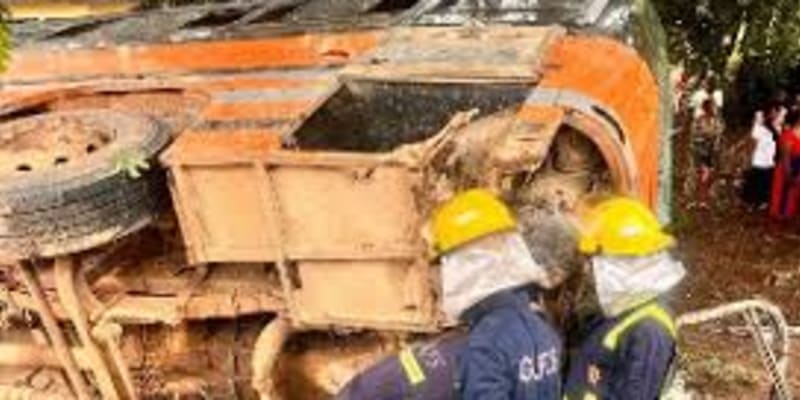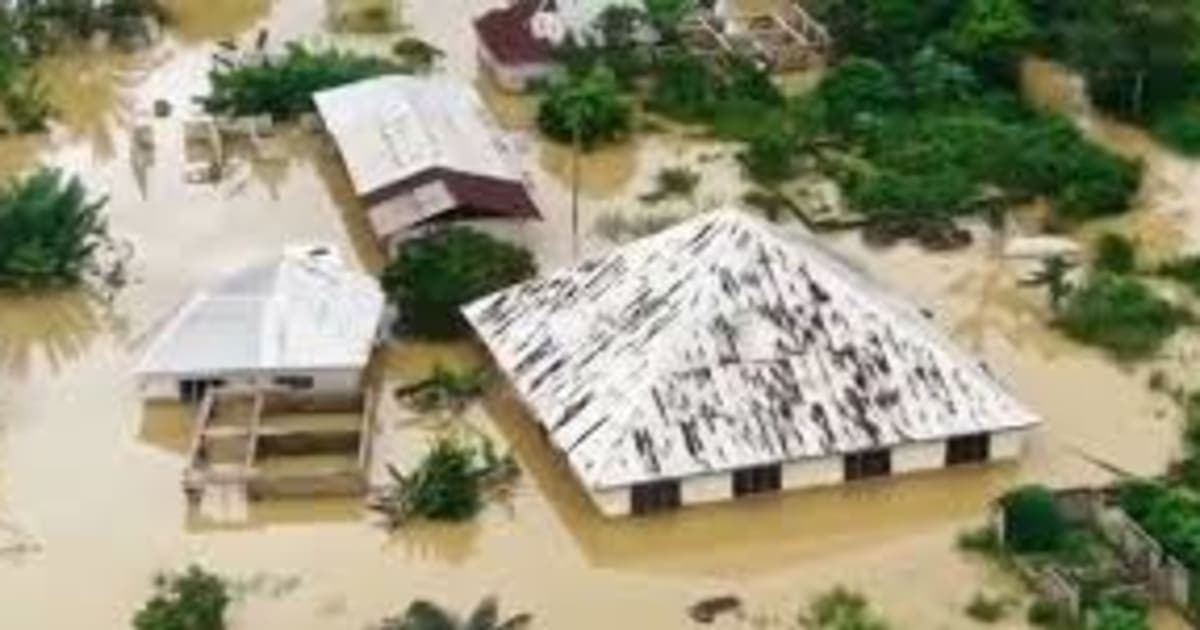
A 20-month-old toddler has died, and three women sustained serious injuries after a rain-induced mudslide the partial collapse of buildings at Tantri in Cape Coast following hours of torrential rainfall on Friday, June 19.
The tragic incident occurred at about 4:45 p.m. when a section of a nearby hillside gave way, sending large volumes of mud and debris crashing onto three buildings situated below the slope.
The victims; Elizabeth Kyerede, 43, Maame Badua, 25, Ella, 17, and Hanson Mensah, aged 20 months, were trapped beneath the rubble and debris.
Residents mounted an emergency rescue operation and managed to pull the victims from the collapsed structure before rushing them to the Ewim Polyclinic for treatment. However, little Hanson Mensah was pronounced dead on arrival.
Ella, who sustained a severe head injury, was later referred to the Cape Coast Teaching Hospital for specialized medical care.
Speaking to Graphic Online, the family head, Richard Joachim, described the incident as unprecedented, noting that residents of the area had never witnessed a mudslide of such magnitude.
According to him, the victims had gathered in a room to seek shelter from the heavy rains when the hillside suddenly collapsed onto the building.
He explained that relatives occupying adjoining rooms heard a loud crashing sound and rushed outside, only to discover that parts of the structure had been buried under mud and debris.
“Everyone was shocked because nothing like this has ever happened here before. The rains were intense, but nobody expected the hill to collapse,” he said.
Mr Joachim disclosed that although three buildings were affected by the mudslide, the other two structures were unoccupied at the time, preventing what could have been a much higher casualty count.
Personnel from the Ghana National Fire Service later arrived at the scene to assist with rescue and emergency response efforts.
The Cape Coast Metropolitan Chief Executive, George Justice Arthur, also visited the bereaved family to commiserate with them and assess the extent of the damage.
The mudslide occurred amid widespread flooding across Cape Coast following a prolonged downpour that began around 7:00 a.m. and lasted several hours.
The rains inundated major roads, homes, businesses and public spaces, disrupting transportation, commercial activities and academic work throughout the metropolis.
Among the hardest-hit areas were the Electricity Company of Ghana (ECG) enclave, the Cape Coast Sports Stadium area, sections of the road leading to the Cape Coast Teaching Hospital, the Ghana National College vicinity, and parts of the University of Cape Coast (UCC).
Floodwaters submerged portions of key roads, causing severe traffic congestion and forcing motorists to seek alternative routes while others struggled through waterlogged streets.
At the University of Cape Coast, flooding affected several sections of the campus, including areas behind the Sandwich Lecture Block, the Science Roundabout, the Zenith Bank area, Ayensu and parts of Sasakawa.
The university subsequently issued a safety advisory urging students and staff to remain indoors where possible and avoid unnecessary movement until floodwaters receded.
Residents described the rainfall as one of the most severe storms to hit the city in recent months, with many pedestrians forced to wade through floodwaters to reach workplaces, schools and business centres.
The Cape Coast Stadium enclave and surrounding communities also recorded extensive flooding, with stagnant water remaining in some areas long after the rains had stopped.
Businesses were equally affected, with some traders delaying the opening of their shops while others reported low patronage due to restricted movement across the city.